 The Daily Dish
← Back to Happy Indoor/Outdoor Cats
What Is Your Cat Actually Saying? Tail Language Decoded
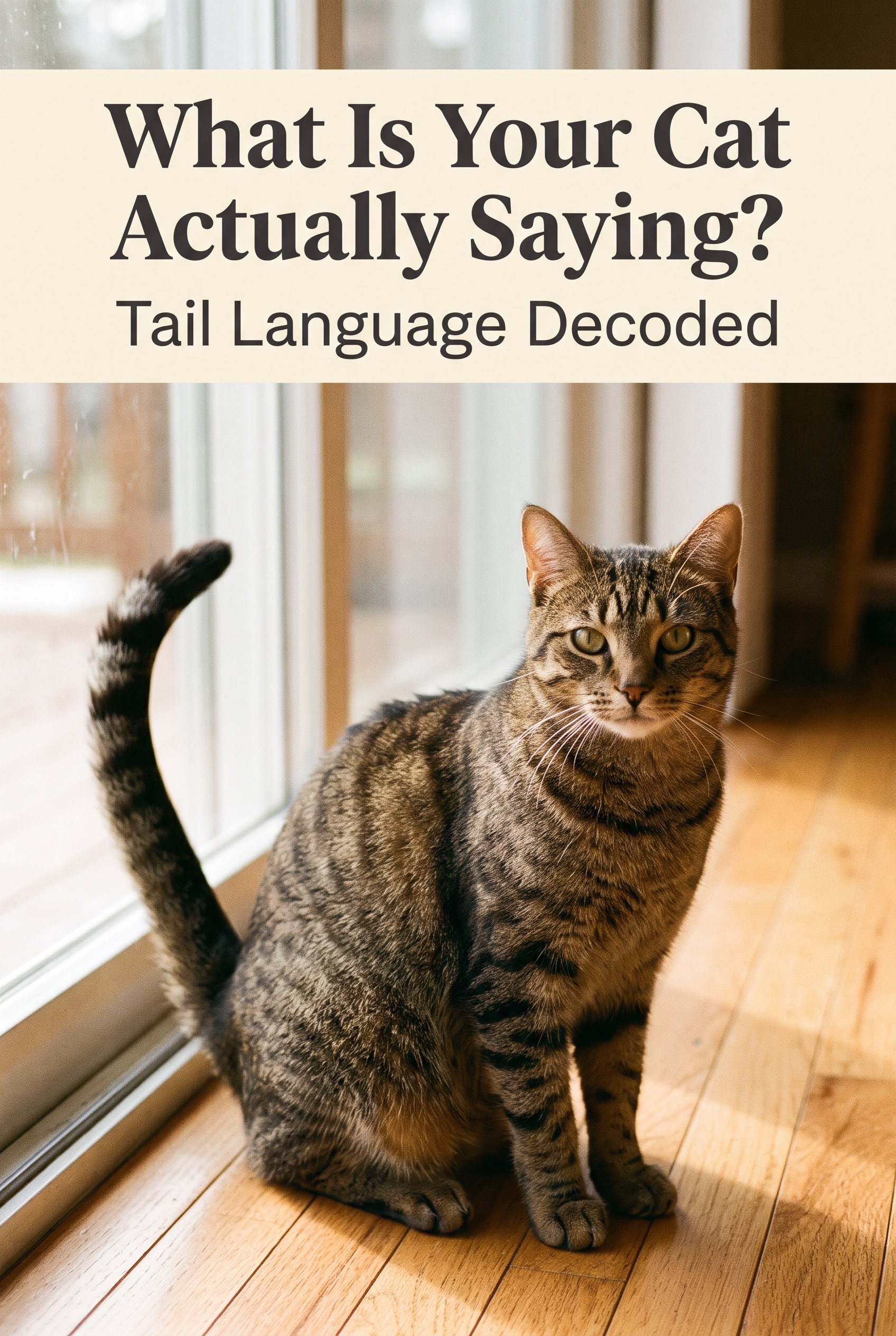
Ever wonder what your cat is thinking when their tail puffs up, curls like a question mark, or twitches slowly? This simple guide decodes 8 common tail signals — so you can tell a friendly greeting from a clear “please give me space,” and build an even stronger bond with your indoor cat.
Tail up and curved, ears forward, body relaxed — a friendly, confident cat.
The 8 signals at a glance
Find the tail you are seeing, check what it usually means, then respond in the way listed. Read the fuller notes below each signal for the details.
1. Tail straight up — a friendly greeting
A tail held high and straight is the classic happy greeting. Your cat is feeling confident, relaxed, and pleased to see you — kittens hold their tails up to their mother the same way. If they walk toward you like this, with ears forward and a relaxed body, it is an invitation to say hello.
2. Question-mark tail — happy and playful
An upright tail that curls over at the tip, like a question mark, means a cheerful cat in a social, playful mood. This is often the best moment to offer a wand toy, a gentle stroke, or a short play session — your cat is telling you they are open to interaction.
3. Quivering tail — excited to see you
A straight-up tail that quivers or vibrates gently usually means your cat is very happy and excited, often when you have just come home or are about to feed them. It is different from spraying: a cat that is spraying usually stands with its tail up against a vertical surface, such as a wall, and backs up to it.
4. Puffed-up tail — frightened, give space
A tail puffed up like a bottle brush, often with an arched back, means your cat feels frightened or startled and is trying to look bigger. Do not reach in to comfort or pick them up. Give them room, let them move away if they want to, and remove or quiet whatever scared them if you can.
5. Low or tucked tail — anxious or unsure
A tail held low, tucked between the legs, or wrapped tight and low against the body signals anxiety, uncertainty, or submission. Your cat is not being stubborn or unfriendly — they are unsure. Keep your voice soft, avoid looming over them, and let them approach you in their own time.
6. Slow swish — focused and interested
A tail moving slowly from side to side, especially while your cat is crouched or staring, usually means intense focus — on a bird outside the window, a toy, or something they are about to pounce on. Unlike a dog, a swishing tail in a cat is concentration, not a greeting. Let them watch, or slide a toy into view so the hunt can finish in play.
7. Fast thrashing or thumping — agitated, pause now
Fast, forceful swishing, lashing, or thumping the floor is a warning sign: your cat is agitated or overstimulated and has had enough. This often happens during stroking. Stop petting, take your hand away, and give them space to settle. Picking up on this signal early prevents most scratches and nips.
8. Tail wrapped around — read the context
A tail wrapped around you, another cat, or your arm is the feline version of a hug — a sign of affection and trust. A tail wrapped tightly around its own body while sitting or lying down can mean something different: your cat may be feeling cautious, cold, or simply keeping their paws warm. Look at the rest of the body — relaxed and leaning in means affection; tense and low means give them time.
Read the whole cat, not just the tail
A tail signal is most reliable when you read it with the rest of the cat and with what is happening around them. A few quick cross-checks help:
- Ears: ears forward and upright usually support a relaxed, interested reading; ears flattened back support a frightened or agitated one.
- Eyes: slow blinks and soft eyes suggest a calm cat; wide, fixed staring or very dilated pupils in normal light suggest high arousal.
- Body: a loose, level body is relaxed; a crouch, an arch, or weight shifted away means your cat is ready to flee or defend itself.
- Voice: purring often means contentment, but cats can also purr when stressed or in pain, so read it with the tail and body rather than on its own.
- Context: the same tail can mean something slightly different during play, at the vet, or when a new animal is nearby, so weigh the situation too.
When to check with a vet
Tail language is about mood, but a physical tail change is different. Call your vet if your cat's tail hangs limp or is dragged, if there is a new bend, swelling, wound, or loss of fur, if your cat cries out when the tail is touched, or if a sudden behaviour change comes with appetite, drinking, or litter-box changes. Those are signs to have checked, not moods to decode.