 The Daily Dish
← Back to Happy Indoor/Outdoor Cats
5 Subtle Signs Your Cat Is Dehydrated + Easy Water Bowl Hacks
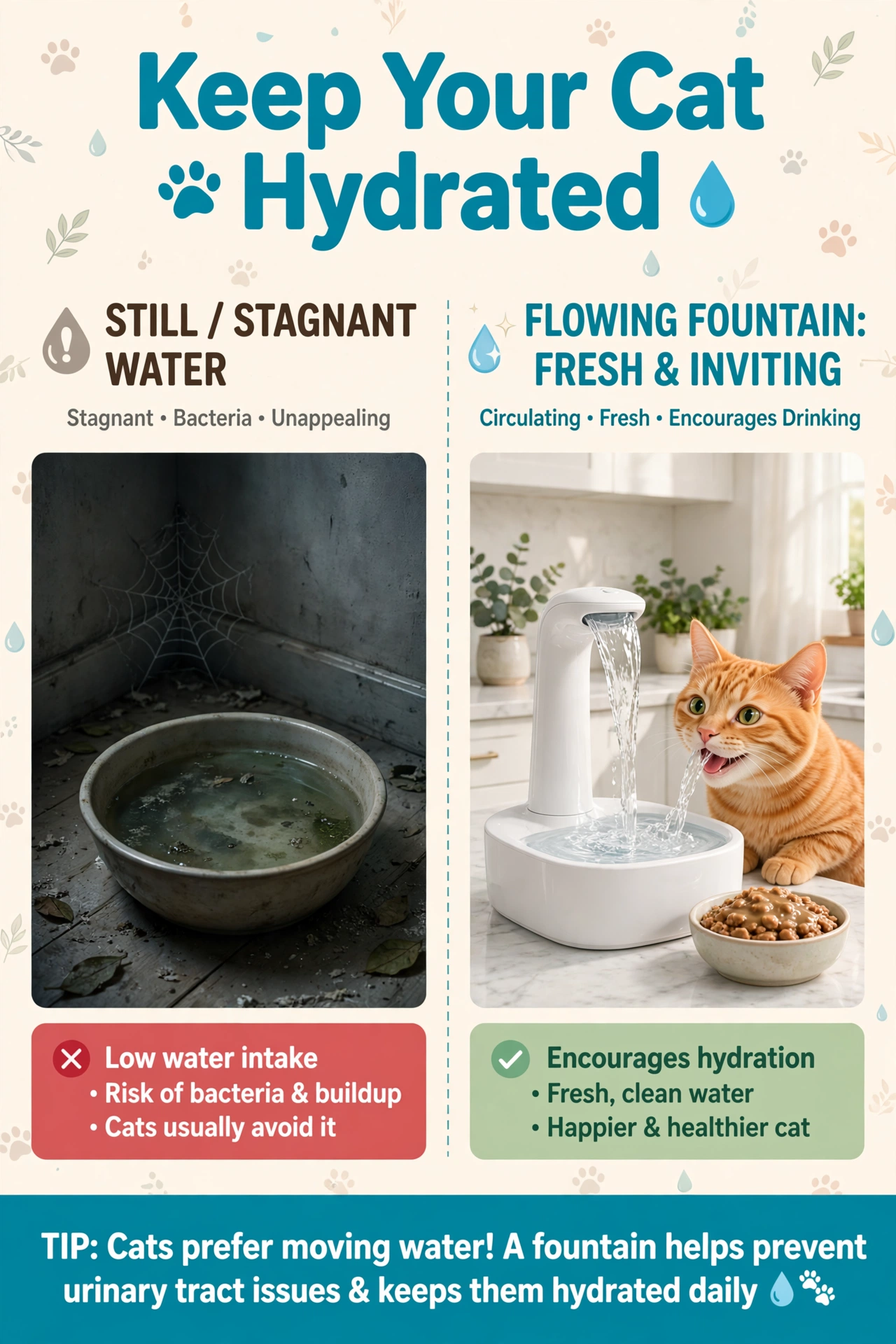
Many indoor cats don't drink enough water daily — and because cats evolved from desert animals, they often won't tell you they're thirsty. Catching dehydration early is easy once you know what to look for, and a few simple water bowl hacks can get your cat drinking more starting today.
Still water vs. a fresh flowing fountain — most cats strongly prefer moving water.
The 5 signs at a glance
Check for these signs at home — one sign on its own is worth watching, and two or more together mean it's time to act.
1. Dry, sticky gums — the quickest check
Lift your cat's lip and touch the gums above the teeth. Healthy gums feel slick and moist, like the inside of your own cheek. If they feel dry or tacky, your cat is likely running low on fluids. This is the easiest check to do at home and a good one to learn when your cat is well, so you know what normal feels like.
2. Skin tent test — the classic at-home test
Gently pinch the loose skin between your cat's shoulder blades, lift it, and let go. In a well-hydrated cat it snaps back flat immediately. If it stays tented for a couple of seconds before settling, your cat may be mildly dehydrated. Older cats naturally have less elastic skin, so use this together with the other signs rather than on its own.
3. Sunken or dull eyes
A hydrated cat's eyes look bright, clear and full. Eyes that look slightly sunken, dull, or with the third eyelid (the pale membrane in the inner corner) showing more than usual can point to low fluid intake. Check in good light and compare with how your cat usually looks.
4. Less energy, less play
One of the earliest signs of dehydration is a cat that just seems flat — sleeping more than usual, turning down play, or moving slowly. It is easy to mistake for laziness, especially in an indoor cat. If the change is sudden or lasts more than a day, check the other signs and their water bowl.
5. Fewer trips to the litter box
A cat that is drinking less will urinate less, and the urine will be darker yellow and stronger-smelling than usual because the body is conserving water. Keep an eye on the litter box for a day or two — a clear drop in wet clumps is worth noting, and no urination for 24 hours is a vet visit, not a wait-and-see.
Easy water bowl hacks that actually work
- Try a pet fountain: many cats prefer moving water — it stays fresher, cooler and more inviting than a still bowl, and the sound draws them in.
- Go wide and whisker-friendly: use a wide, shallow ceramic or stainless steel dish so whiskers don't touch the sides; many cats avoid deep, narrow bowls.
- Put water in more than one place: set out two or three bowls in different rooms, away from the litter box and away from the food bowl — cats often prefer to drink away from where they eat.
- Add moisture to meals: mix a spoonful of water or low-sodium broth into wet food, or offer wet food more often — it is about 70% water, while dry food is only about 10%.
- Keep it fresh: change the water daily, wash the bowl every day, and keep bowls out of direct sun so the water stays cool and clean.
When to call the vet
Home checks help you spot a problem early, but they are not a diagnosis. Call your vet promptly if your cat shows two or more of these signs together, refuses water entirely, is vomiting or has diarrhea, seems weak or wobbly, or hasn't urinated in 24 hours. Kittens, senior cats and cats with kidney or urinary issues dehydrate faster and should be checked sooner.